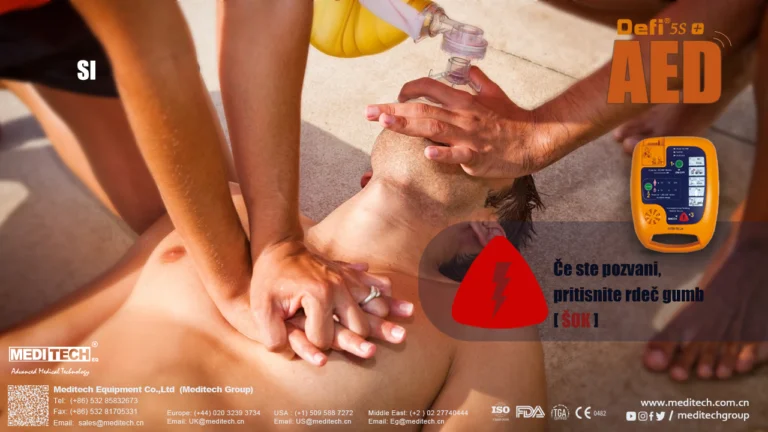
Defibrillator
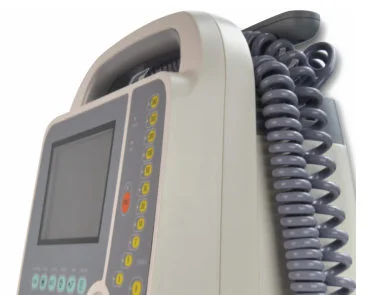
Defibrillator device

Symbol for automated external defibrillator
Defibrillator (in English: Defibrillation) is a medical device used to treat dangerous heart rhythm disturbances (arrhythmias) such as ventricular fibrillation and ventricular tachycardia, as well as non-dangerous ones such as atrial flutter and atrial fibrillation by delivering an electrical shock that terminates the disturbance in the transmission of the electrical signal in the heart.
How the device works
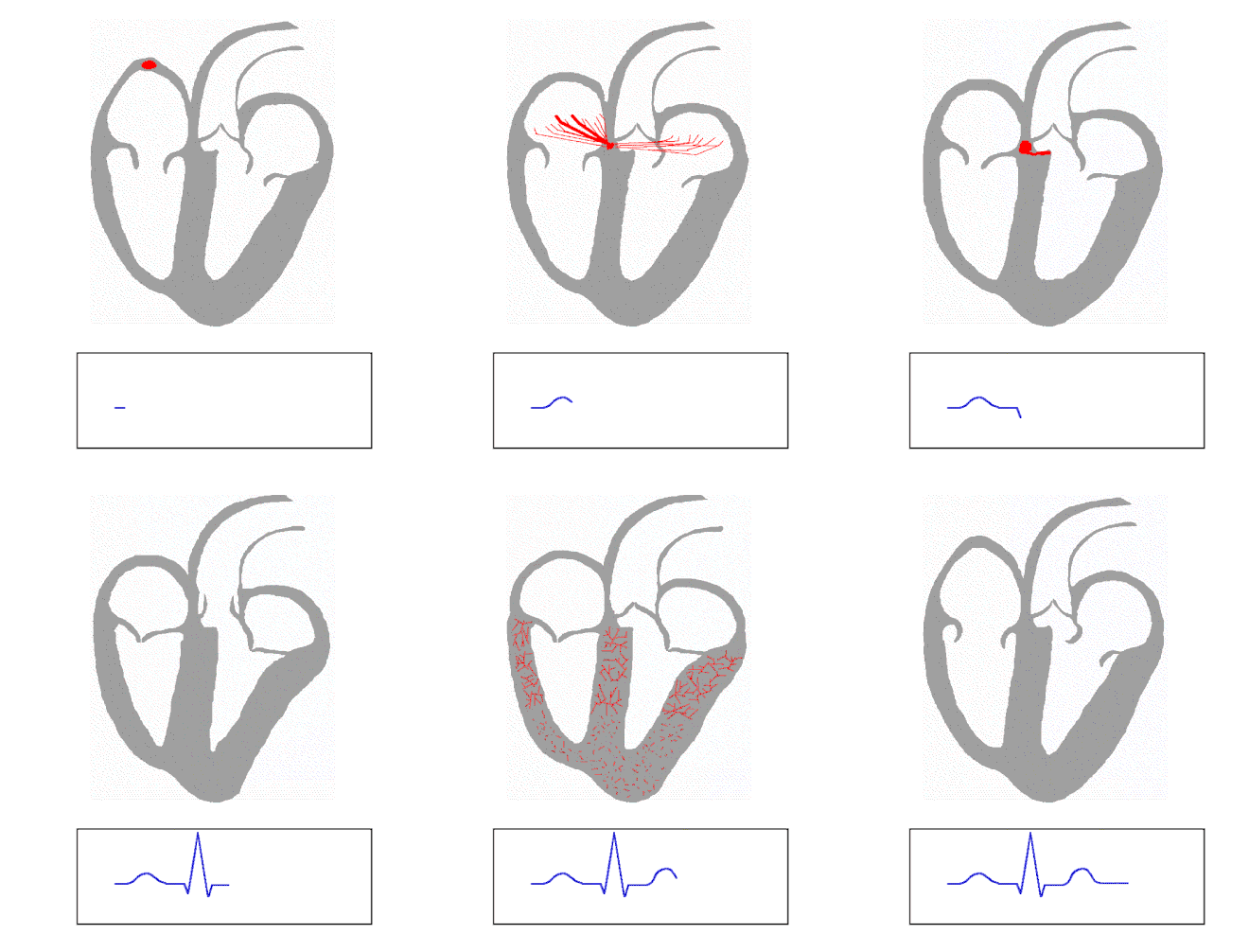
The system for transmitting the organized electrical signal of the heartbeat in the normal state.
The defibrillator works to terminate disturbances in the transmission of the electrical signal across the heart, by directing an electrical current higher than the current generated in the heart (see electrocardiogram) resulting from the group of action potentials generated in the heart muscle cells, such that it stops all the random electrical signals in the heart, so that the heart returns electrically to the zero point, and the heartbeat begins to emerge from the primary pacemaker in the heart in the best case.
From a functional standpoint, the conductive cell for the current needs a period to rebuild the cell membrane potential, before allowing the incoming electrical current to pass through it. This period that follows the passage of the electrical current, during which the cell is not susceptible to the electrical signal, is called the refractory period. In the case of fibrillation, the heart cells transmit the electrical signal randomly, meaning that each cell "does its own thing," and thus the heart muscle enters a state of fibrillation instead of regular and effective contraction. The defibrillator works by passing an electrical shock that forces all the heart cells to enter at once and at the same moment the refractory period, which explains the cardiac silence for the moments following that shock. Then the fastest heart cells begin to restore the cell membrane potential, which are usually the cells of the sinoatrial node, in issuing the electrical signal and thus starting the normal sinus rhythm, and if that succeeds, the heart has avoided the arrhythmia.
 1. Ventricular fibrillation 1. Ventricular fibrillation |  2. Immediately after the electrical shock cardiac silence for moments 2. Immediately after the electrical shock cardiac silence for moments | 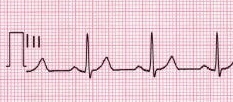 3. Normal sinus rhythm of the heart in case of success 3. Normal sinus rhythm of the heart in case of success |
Method of use
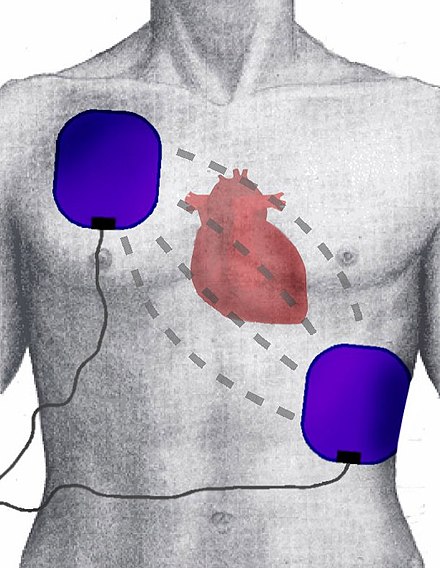
Method of placing the defibrillator.
There are several types of defibrillators that differ from one another in their operating principles and method of application. The following is an explanation of how to use the manual external defibrillator, which is the device commonly found in hospitals, emergency departments, intensive care units, and some emergency teams.
- The device's electrodes are coated with conductive gel that works to lower the electrical resistance of the skin to the current and avoid painful superficial burns resulting from the current overcoming the skin's resistance on the one hand, and to ensure that the greatest possible amount of therapeutic energy reaches the heart muscle and thus increase the effectiveness of the treatment.
- The heartbeat waveform is diagnosed by relying on the electrocardiogram on the device's screen, and based on the diagnosis;
- Selecting the appropriate voltage for treatment, which depends on the type of defibrillator. In monophasic devices, the energy used is 360 joules, while in biphasic devices it is between 100 and 200 joules[1]. It is also determined whether the electrical shock will be synchronized or non-synchronized with the electrocardiogram (in emergency cases and cardiac arrest, the choice is non-synchronized).
- Placing the two electrodes on the chest as shown in the diagram and pressing them firmly to obtain good contact and conduction that reduces resistance through the skin.
- Starting to charge the electrodes with the button that is usually on these electrodes.
- After hearing the signal that the electrodes have finished charging, everyone present is alerted with a clear and loud voice to move away from the patient so that none of those present is exposed to the electrical shock!
- After ensuring that no one is touching the patient, the electrical charge is discharged to obtain the required treatment.
 See also: Cardiopulmonary resuscitation
Types of defibrillators

Diagram of the operating principle of the electrical defibrillator, here it is monophasic
There are many types of defibrillators according to the function and need required from the device, as well as according to the principle used in the device. The devices are divided according to the principle into two types: monophasic devices and biphasic devices.
This division takes into account the technical aspect of the electrical current. The electrical current in monophasic devices flows in one direction from one electrode to the other, which is the older system in these devices. These simpler devices require greater energy to achieve the same goal. Here, a higher electrical voltage difference is used, usually at the level of 360 joules.
In the late 1980s, defibrillators were developed that use bidirectional and thus biphasic electrical current. These devices work by changing the direction of the current within a short period of about 10 milliseconds and thus use a smaller amount of voltage difference and less energy during the electrical shock. These devices are considered more effective in terminating ventricular fibrillation, as the success rate in resuscitating patients using biphasic devices can rise from about 28% to 40%[2]. The principle of biphasic current was first used in implanted devices, but it was generalized to the rest of the devices. The current trend in the world is moving toward a gradual replacement of monophasic current devices with biphasic ones. The energy selection here is 100-200 joules.
As for the functional aspect, there are multiple forms that perform different functions, including:
Simple manual defibrillator
Two electrodes (paddles), either in the form of handles as clearly shown in the image, or it allows the attachment of discharge pads as shown in the image above. In the case of discharge paddles, a resistance-reducing gel must be used (in the image, the white tube on the left), while in the case of discharge pads, these pads are ready-made and have an adhesive substance that reduces resistance. This type of device is the simplest and most widespread due to its low price, and because it performs the most important task, which is terminating cardiac fibrillation. Devices vary in their shapes according to the manufacturer, but it can be said that the basic components present in all devices are (see the image):
- A screen for analyzing the electrocardiogram, on which a single lead tracing appears, sufficient for diagnosing heart rhythm disturbances, and thus sufficient for treating them when needed.
- The charging capacitor, whose function is to charge the electrodes with the specified energy via the energy selection unit on the device interface.
- The control unit, which contains the buttons for controlling the basic functions of the defibrillator.
Advanced manual defibrillator
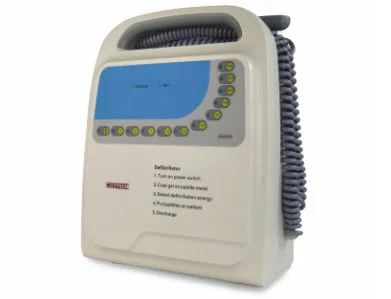
Manual defibrillator

Advanced manual defibrillator (close-up) showing the screen with advanced data such as oxygen level, and pacemaker control (text in German)
This device is like the basic device, but features and functions have been added to it, making it qualified to perform roles other than simple shocking and terminating cardiac fibrillation. Among these added features and functions:
- Monitoring unit This unit provides more information about the patient's clinical condition, and its capabilities vary according to the side sensors and diagnostic devices it is equipped with, such as:
- Oximeter which measures the level of blood oxygen saturation.
- Extended electrocardiogram recorder which is supplied with ECG leads and sensors that allow a complete electrical tracing (12 leads) to be recorded and contribute to increasing the diagnostic benefit of the device, as the device can be used to monitor heart rhythm (during patient transport, for example, as a mobile monitoring unit) or in diagnosing myocardial infarction cases or in diagnosing various types of arrhythmias... etc.
- Synchronization feature which can be activated by pressing its dedicated control button, and it means that the electrical shock is synchronized with the electrocardiogram, specifically with the peak of the R wave. This feature is used in treating atrial flutter and atrial fibrillation by the method of cardioversion, in order to avoid the negative effect on the ventricular rhythm, since a shock at the wrong moment (T wave) may lead to ventricular fibrillation.
- External pacemaker which is used in treating bradycardia or asystole in emergency cases and quickly, where the discharge pads are attached to the patient's chest and back, and when this feature is activated, the device works as a temporary pacemaker until the bradycardia is treated by a more effective and less harmful means for the patient (external pacing causes pain to the patient, so the patient must be anesthetized during external pacemaker treatment, and it is suggested to expedite the use of another pacemaker such as a transvenous pacemaker).
Automated and semi-automated defibrillators

Automated defibrillator .

Position of the discharge pads.
In line with many studies[3][4][5] that indicate that prompt use of the defibrillator has a major role in raising the success rate in treating cardiac arrest and in restoring normal heart rhythm with minimal harm to the patient. Accordingly, many recommendations have been directed toward recommending the distribution of automated defibrillators, easy to use for the general public, not requiring training to use, and safe for both patients and the users themselves, in the hope that this will contribute to saving greater numbers of patients suffering from cardiac arrest.
These devices contain computer programs that analyze the electrocardiogram and determine whether it is treatable with an electrical shock or not. Based on the computer analysis, the device gives audible and digital instructions on the device's screen to the user in a clear and unambiguous manner, so that any person, even if untrained, can use the device effectively. These devices are called automated devices, and they do not deliver the electrical shock unless the device detects a rhythm that is treatable with a shock.
Many developed countries have begun deploying these devices in public places such as airports, public markets, and others. According to the recommendations of the European Resuscitation Council, it is advised to place an automated external defibrillator in every place where the probability of cardiac arrest occurring exceeds once every two years[1].
Semi-automated devices are devices that have a program like automated devices, but they also contain the ability to be converted to manual mode, which enables medical professionals to use the device as an ordinary manual defibrillator, providing the physician or technician with the ability to use the device more quickly, without the need to wait for the computer analysis, and also enables the specialist to perform advanced treatments other than simple shocking. These devices are placed in ambulances and medical clinics, so that medically unqualified staff can use the automated mode, and when medically qualified personnel arrive, it is converted to manual mode.
Implantable defibrillator
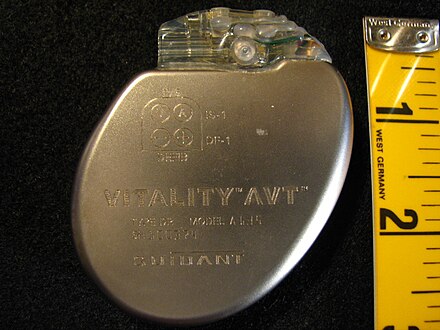
Implantable defibrillator device.

X-ray image showing the implantable defibrillator.
In patients at risk of death from cardiac arrest, a small defibrillator device (similar to an implanted cardiac pacemaker) can be implanted. The device monitors the heart rhythm, and through a program delivers a medium-voltage electrical shock of 10-40 joules through leads implanted in the heart ventricle to terminate cardiac fibrillation and restore sinus rhythm. As a treatment for patients who have survived cardiac arrest or ventricular tachycardia, treatment with implantable defibrillators is considered more successful than the old treatments with anti-arrhythmic drugs
[6]
The development of these devices began in
1969 but they initially faced technical difficulties, and afterward challenges due to the medical world's rejection of the idea at the time and its lack of conviction in it, until 1980 came, when the first defibrillator (in English: ICD or implantable cardioverter defibrillator) was implanted at Johns Hopkins Hospital, beginning the era of implantable defibrillators[7].
Modern implantable devices represent more than just a defibrillator, as they contain modern software that allows analysis of heart rhythm, and treatment of a number of arrhythmias such as sinus flutter and ventricular flutter and ventricular tachycardia without the need to deliver an electrical shock, by issuing rapid electrical signals much faster than ar.m.wikipedia.org/wiki/انسداد_العضلة_القلبية these tachycardias, and thus "taking over" the rhythm in the heart for moments and then returning the heart after taking over to a slower and normal rhythm, and in this way it tries to prevent the development of ventricular fibrillation[7]. It also performs all the functions of implanted pacemakers. The latest generations of implantable defibrillators have the ability - through additional leads - to stimulate the ventricles separately to work on synchronizing the ventricles to increase the heart's pumping ability in cases of heart failure.