
Pulse Oximeter and some points about it
Pulse Oximeter and some points about it
Pulse: Changes in the arterial blood with each heartbeat
Oxi: Oxygen
Meter: Measurement
A pulse oximeter is a device for measuring the rate and level of oxygen in each pulsation of the blood arteries.
In what cases is it used?
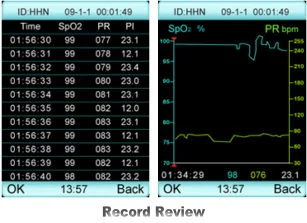
The pulse oximeter measures the oxygen level in the arterial blood. In fact, this device measures the oxygen level as a percentage of hemoglobin molecules that are combined with oxygen relative to the total amount of hemoglobin molecules. Also, most pulse oximeter devices display the heart rate (Heart Rate) as well.
How the device works:
The probe of this device consists of an optical sensor that is placed on pulsating arterioles (usually on the person's index finger). On one side, two LEDs are placed as transmitters, emitting 2 light waves: red with a wavelength of 660 nanometers and infrared with a wavelength of 930 nanometers. The red light is absorbed by hemoglobin, whose natural color is blue, and the infrared is absorbed by oxygen combined with hemoglobin (HbO2). In fact, two types of wavelengths are sent by these two LEDs that are the transmitters....On the other side, there is a receiver, or in other words a photodiode, whose task is to detect the light passing through the tissue. This light is converted by the receiver into an electrical signal according to the light intensity. In fact, this signal is the input to the device and the electronic boards and microprocessors, which after calculations by these circuits determine the measured value of blood oxygen saturation.
The probe of these types of devices is found in two forms: silicone or clip-on (hard material).
Of course, the silicone type is used more for children or for individuals who are under anesthesia, so that if the patient's hand moves, the probe is not damaged.
Another point regarding the probe of this device is that some probes are specific to that same device and will not work on another device with the same brand and model.
Where is this device used:
This device is mostly used in ICU – CCU - recovery - emergency and operating room departments where the patient's blood oxygen level is important.
Some repair tips:
Most failures of this device are related to the probe and the device battery.
Regarding the failure of the device probe, we can replace its receiver and transmitter sensors, but sometimes these sensors do not have the necessary accuracy and show the oxygen saturation
level with error, so it is better to replace the probe completely.
Another problem that may occur for the device is the display of ERROR80 on the LCD, which is related to the device battery, and by replacing the battery
this problem is resolved, as most batteries of this device are 6 volts 4 amps